
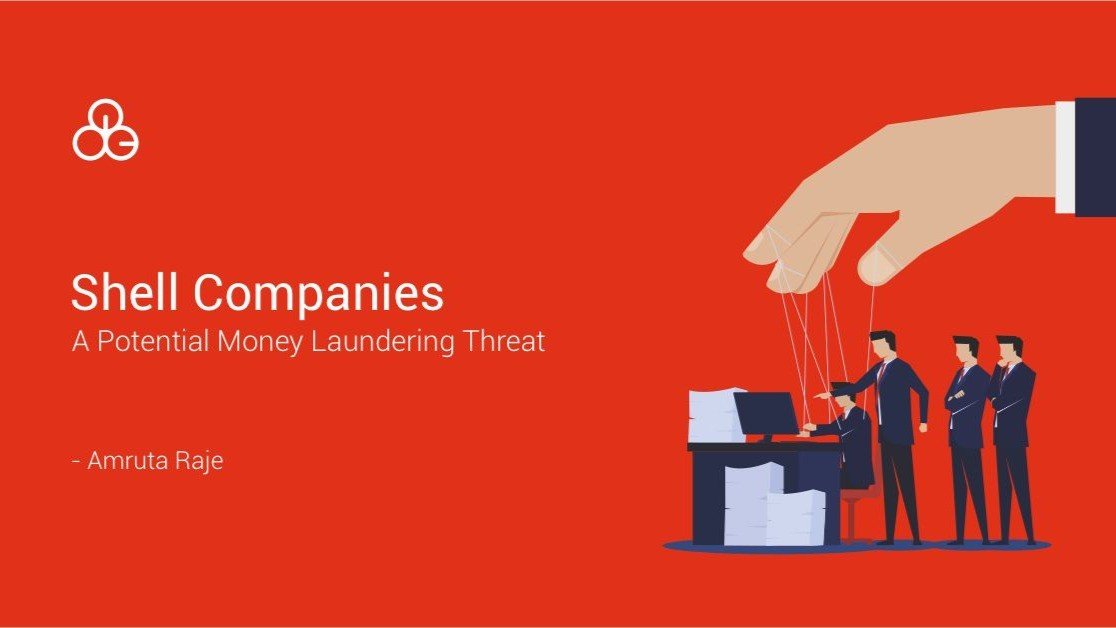
Understanding the dual nature of shell companies
Shell companies occupy a complex position in the financial system. While they can serve legitimate commercial purposes, they can also be exploited to conceal illicit funds, disguise beneficial ownership and facilitate the movement of money across borders.
Businesses may establish these entities to hold shares, manage intangible assets, support corporate restructuring or facilitate domestic and international transfers. Their existence alone does not indicate criminal activity.
The challenge for financial institutions lies in distinguishing legitimate corporate structures from those being used to facilitate money laundering or other financial crimes. Because shell companies can operate with limited visible business activity and ownership structures that are difficult to trace, identifying their true purpose can be challenging.
The level of risk associated with a shell company varies according to several factors, including its ownership and control, the customer's business activities, the purpose of the account, the financial products being used and the jurisdictions involved.
For banks and other regulated institutions, this makes a risk-based approach essential. Customer relationships must be assessed in context, with appropriate measures in place to identify, evaluate and manage potential financial crime exposure in line with applicable regulatory requirements.
How shell companies can facilitate money laundering
Shell companies may be incorporated into financial crime schemes in several ways. Understanding these methods can help financial institutions recognise potential warning signs and strengthen their anti-money laundering (AML) controls.
1. Professional money laundering networks
Professional money launderers may use shell companies as part of structured arrangements designed to move illicit proceeds through the financial system.
These entities may be established with assistance from professional intermediaries, including lawyers or trust and company service providers. Once corporate entities and associated bank accounts are in place, the accounts may be operated remotely, sometimes from jurisdictions different from where the businesses were incorporated.
Funds originating from illicit activities can then be transferred through accounts held by these entities, potentially passing through multiple individuals, businesses or jurisdictions. Rapid movement of funds can make it more difficult for financial institutions to establish the economic purpose of transactions and identify the parties ultimately benefiting from them.
For AML teams, assessing the legitimacy of the customer relationship requires more than reviewing incorporation documents. The ownership structure, expected account activity, source of funds and actual transaction behaviour all contribute to a more complete understanding of risk.
2. Trade-based money laundering
Trade-based money laundering (TBML) involves using trade transactions to disguise the origin or movement of illicit funds. Shell companies can play a role by presenting questionable financial flows as payments associated with legitimate commercial activity.
In some schemes, these entities may be linked to fictitious trade, manipulated invoices or transactions that lack a credible underlying business purpose. Funds can enter the financial system under the appearance of ordinary commercial revenue before moving through banking relationships and cross-border payment channels.
The involvement of corporate entities can make these arrangements harder to identify, particularly when transaction details appear plausible in isolation.
Financial institutions therefore need to consider whether payment activity aligns with the customer's known business profile, the nature of the underlying trade and the expected movement of funds. Reviewing transaction patterns alongside relevant customer and trade information can help uncover inconsistencies that may warrant further investigation.
3. Cross-border wire transfers
International wire transfers provide businesses with an important means of moving funds between markets. However, shell companies may also be used to obscure the beneficial owners, origin or intended purpose of cross-border payments.
When multiple entities or jurisdictions are involved, it can become difficult to establish the commercial rationale behind a transfer or determine who ultimately controls the funds. Such arrangements may be exploited to move illicit proceeds through the financial system and, in some cases, support terrorist financing.
A transaction that appears routine on its own may carry a different risk when viewed alongside the customer's ownership structure, previous account activity, counterparties and geographic exposure.
Monitoring international transfers in context is therefore important. Financial institutions need to identify unusual payment behaviour, assess deviations from expected activity and investigate transactions where the available information does not provide a credible explanation.
Strengthening AML controls to identify shell company risks
The potential misuse of shell companies highlights a continuing challenge for financial institutions: identifying suspicious activity when corporate structures and transaction flows are designed to appear legitimate.
Effective controls should bring together customer due diligence, beneficial ownership assessment, risk evaluation and transaction monitoring. No single indicator is necessarily conclusive; the objective is to understand how different elements of customer and transaction information relate to one another.
Transaction monitoring systems can support this process by identifying unusual patterns, deviations from expected account behaviour and activity that may require closer examination. When combined with reliable customer information and appropriate investigative procedures, these capabilities can help compliance teams prioritise alerts and assess potential financial crime risks more effectively.
Regulatory expectations concerning beneficial ownership transparency and AML controls also continue to evolve across jurisdictions. Financial institutions must therefore ensure that their risk assessment and monitoring approaches remain aligned with applicable requirements and the risks associated with their customers, products and markets.
Ultimately, managing shell company risk requires more than identifying the presence of a corporate entity. It requires understanding who controls it, why it exists, how it operates and whether its financial activity is consistent with its stated purpose.
For financial institutions, a contextual, risk-based approach can strengthen the identification of suspicious financial flows, support more informed investigations and contribute to a more effective financial crime compliance framework.
Frequently asked questions
What is a shell company?
A shell company is a corporate entity that may have limited visible business activity. It can serve legitimate purposes, such as holding shares or assets, but may also be misused to conceal ownership or facilitate the movement of illicit funds.
Are all shell companies involved in money laundering?
No. A shell company's existence alone does not indicate criminal activity. Its risk depends on factors such as ownership and control, business purpose, account activity, products used and the jurisdictions involved.
How are shell companies used in money laundering?
They may be used to obscure beneficial ownership, move illicit funds through multiple accounts or entities, disguise payments as legitimate trade transactions, or make cross-border transfers harder to trace.
What is the role of beneficial ownership checks in identifying shell company risk?
Beneficial ownership assessment helps institutions understand who ultimately owns or controls a corporate entity. This information can be considered alongside the company's stated purpose, business activity and transaction behaviour.
How can shell companies be used in trade-based money laundering?
Shell companies may be linked to fictitious trade, manipulated invoices or transactions without a credible commercial purpose. These arrangements can make suspicious funds appear to be payments associated with legitimate business activity.
What are potential red flags associated with shell company transactions?
Potential indicators include unclear ownership or control, account activity inconsistent with the stated business, rapid movement of funds, unexplained cross-border transfers and payments that lack a credible economic or commercial rationale. No single indicator is conclusive.
How can banks detect suspicious activity involving shell companies?
Banks can combine customer due diligence, beneficial ownership assessment, risk evaluation and transaction monitoring. Reviewing payment patterns alongside customer and business information can help identify activity that warrants further investigation.
Why is a risk-based approach important when assessing shell companies?
Shell companies vary in purpose and risk. A risk-based approach helps institutions assess each relationship in context instead of treating every corporate entity as suspicious.