
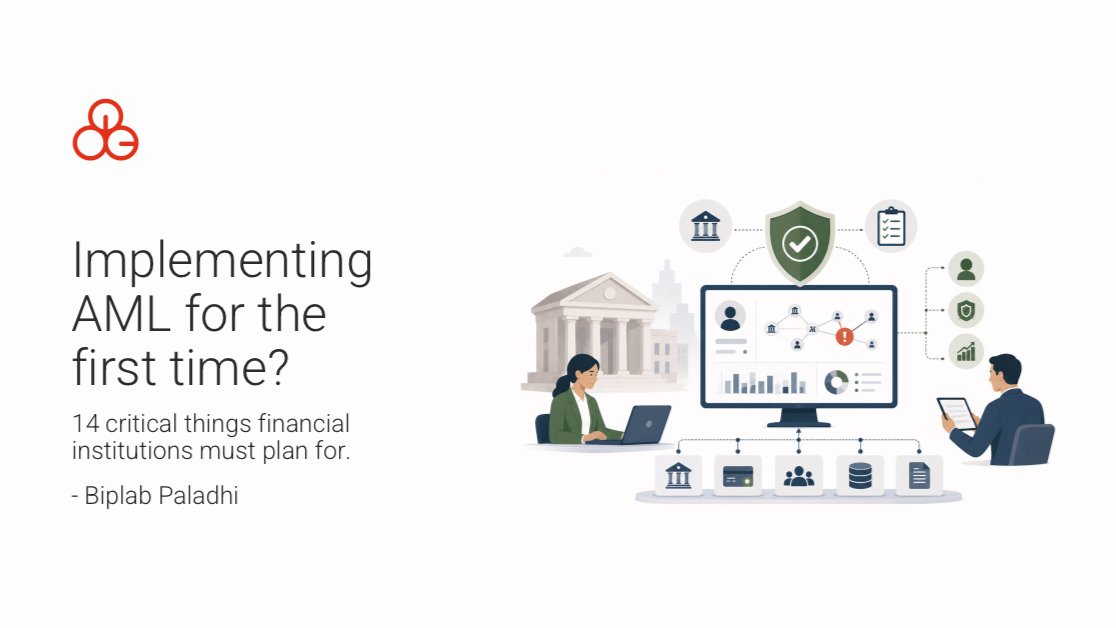
Implementing an anti-money laundering (AML) system is about more than selecting the right technology. Financial institutions need to consider data quality, regulatory requirements, customer risk assessment, transaction monitoring, sanctions screening, investigation workflows and the operational infrastructure that supports these controls.
Whether a bank is introducing AML technology for the first time, replacing a legacy platform or strengthening an existing financial crime compliance framework, success depends on how well the system aligns with its data, processes, people and risk management objectives.
For financial institutions in the UK and across international markets, a well-planned AML implementation can help establish more consistent monitoring, improve the handling of alerts and support more informed compliance decisions. However, gaps in data, system integration, risk models or testing can limit the effectiveness of even a technically capable solution.
The following 14 considerations provide a practical starting point for institutions planning a new AML implementation or reviewing an existing system.
1. Assess Data Quality Before Implementation
An AML system relies on the quality, completeness and consistency of the data it receives. Missing transaction attributes, incomplete customer records or incorrectly populated fields can affect monitoring scenarios and restrict the system's ability to identify potentially suspicious activity.
Before implementation, institutions should assess the data available from their core banking systems and other relevant sources. Each field should be evaluated for its relevance to monitoring and investigation requirements.
Compliance teams should also work with the teams responsible for data entry and maintenance to address recurring gaps. Data quality needs to be treated as a shared responsibility rather than a technical issue alone.
2. Identify Relevant Data Sources and Assess Their Readiness
Financial institutions often maintain information across multiple departments and applications, including treasury, finance, payments and wealth management. These systems can contain valuable information that helps explain customer behaviour and the movement of funds.
For example, investment and portfolio data may provide additional context when examining transactions involving subscriptions, investments or transfers between financial products.
Institutions should identify relevant internal data sources, assess their availability and determine how they can be incorporated into the AML framework. Relying on a limited set of feeds may leave important aspects of customer activity outside the monitoring process.
3. Map Regulatory and Compliance Requirements
AML system design should begin with a clear understanding of the requirements the institution needs to meet. These include applicable regulatory expectations, internal compliance policies, monitoring obligations and investigation procedures.
Transaction monitoring scenarios, reporting processes, case-handling requirements and turnaround times should be mapped to the relevant obligations during the design phase.
For institutions operating across different jurisdictions, requirements may vary by market. A structured mapping exercise helps ensure that the system configuration reflects the institution's applicable obligations rather than relying on a generic implementation model.
4. Establish a Comprehensive Risk Assessment Framework
An effective AML framework needs to distinguish between customers and activities with different levels of risk. This requires institutions to consider the relevant dimensions of their available data when defining risk categories.
Customer information alone may not provide a complete picture. Geographic exposure, payment behaviour, product usage, international transfers and other relevant activity may influence the assessment.
For example, a customer whose declared occupation and income appear consistent with a low-risk profile may exhibit transaction patterns that warrant further scrutiny. If these patterns are excluded from the risk assessment, the resulting classification may not reflect the wider circumstances.
Institutions should define clear risk criteria and identify the data required to support them.
5. Select Appropriate Monitoring Scenarios and Calibrate Thresholds
Transaction monitoring scenarios should reflect the institution's business activities, exposure to financial crime and identified risk patterns. Selecting appropriate scenarios requires an understanding of the transactions being monitored and the behaviours the system is intended to identify.
Thresholds also require careful calibration. Settings that are too restrictive may generate excessive alerts, while settings that are too broad may reduce the usefulness of the results.
Institutions should evaluate scenario performance, review alert outcomes and adjust thresholds in a controlled manner. The objective is to support meaningful detection and investigation rather than simply increase or reduce the number of alerts generated.
6. Review Customer Risk Scoring Models
Customer risk scoring helps institutions determine the level of scrutiny and monitoring appropriate for each relationship. If the model relies on limited information or does not reflect changes in customer behaviour, risk ratings may become outdated or inaccurate.
A customer's initial onboarding profile may not represent their circumstances indefinitely. Changes in geographic exposure, product usage, transaction behaviour or other relevant factors may require the institution to reassess the risk classification.
Risk models should therefore incorporate relevant information and be reviewed periodically. Institutions should also assess whether the resulting ratings are consistent with the risks identified through other parts of the AML framework.
7. Integrate AML with KYC and Customer Due Diligence Systems
Know Your Customer (KYC) and customer due diligence processes provide information that supports AML monitoring. When these systems operate independently, differences in customer information or risk classifications can create inconsistencies.
For instance, a customer classified as high risk during onboarding may retain a different risk rating in the AML platform if updates are not transferred correctly.
Institutions should establish reliable integration between onboarding, KYC and AML systems so that relevant customer details, risk ratings and enhanced due diligence information remain aligned.
Automated synchronisation, appropriate controls and clear ownership of data updates can help reduce discrepancies and support more consistent monitoring.
8. Design an Effective Sanctions Screening Framework
Sanctions screening is an important component of financial crime compliance. Institutions should determine the screening coverage required across customers, counterparties and relevant transactions, including the use of batch or real-time screening where appropriate.
The quality of screening depends partly on how information is mapped and matched against applicable sanctions lists and watchlists. Poor field mapping or unsuitable matching settings can produce excessive false positives, increasing the workload for investigation teams.
Institutions should configure screening according to their requirements, assess match quality and review settings periodically. The aim is to identify relevant potential matches while enabling analysts to investigate results efficiently.
9. Build Structured Alert Management and Investigation Workflows
Generating an alert is only one stage of the AML monitoring process. Institutions also need a clear and efficient method for assigning, reviewing, escalating and closing alerts and cases.
Workflow design should reflect the number of investigators, their responsibilities, areas of expertise and the institution's reporting hierarchy. Whether cases are assigned through a rotational process or managed through a shared pool, the allocation approach should support appropriate distribution and oversight.
Clear ownership, escalation paths and consistent handling procedures help reduce operational bottlenecks and make investigation processes easier to manage.
10. Prepare Teams Through Training and Change Management
An AML system can underperform when the people using it are not adequately prepared for new processes, alert types or investigation requirements.
Training should cover the functionality of the system as well as the risks it is designed to help identify. Investigators may need to become familiar with patterns such as layering, mule account activity and trade-based money laundering, while customer-facing teams should understand relevant warning signs and risk classifications.
Change management should involve the teams affected by the implementation, including compliance, operations, branch staff and technology functions. Their understanding of the new processes is important to consistent adoption.
11. Establish Clear Policies and Operating Procedures
Technology needs to operate within a defined set of policies and procedures. Without clear standards, institutions may apply inconsistent approaches to customer risk reviews, alert closure, threshold adjustments and scheduled risk calculations.
Policies should specify responsibilities, review frequency, escalation criteria and approval requirements. Changes to monitoring settings should follow an established process rather than being made without adequate assessment or documentation.
Institutions should also define consistent standards for recording investigation outcomes and closing alerts. These procedures help promote accountability, repeatability and appropriate oversight.
12. Maintain Oversight of Vendors and Third-Party Risk
Using an external AML technology provider does not remove the financial institution's responsibility for its own compliance framework. Institutions need to maintain oversight of the solution, its operation and the services supporting it.
Vendor arrangements should clearly define responsibilities, support expectations, service levels and issue-resolution processes. Appropriate audit trails should also be maintained for relevant system activities.
Regular review of the vendor relationship can help institutions assess whether the technology and associated services continue to meet their operational requirements.
13. Plan Thorough User Acceptance Testing and Parallel Runs
User acceptance testing (UAT) is a critical stage in AML implementation. It helps establish whether the configured system performs as expected against business requirements, monitoring scenarios and investigation workflows.
Testing should cover data mapping, alert generation, case handling, risk classification and other relevant processes. Defects should be documented, corrected and retested before the system is approved for deployment.
Where appropriate, parallel runs against an existing or legacy system can help institutions compare results and identify discrepancies before transition. A rushed go-live may leave data issues, incorrect alerts or malfunctioning scenarios undiscovered.
Deployment should follow evidence that the system is functioning as intended and that users can carry out their responsibilities effectively.
14. Ensure Infrastructure, Performance and Recovery Readiness
The effectiveness of an AML platform also depends on the infrastructure supporting it. Database performance, network stability, data processing and disaster recovery arrangements can all influence the system's ability to operate reliably.
As transaction volumes and historical records grow, institutions need suitable database management practices and data retention or purging policies. Processing delays or network interruptions can affect the availability and consistency of information entering the monitoring system.
Institutions should maintain appropriate backup arrangements, test recovery procedures periodically and assess the impact of infrastructure failures on transaction processing, alerts and investigation records.
Operational readiness should be considered part of AML system implementation, not a separate task to address after deployment.
Rebuilding an existing AML system
Rebuilding an anti-money laundering (AML) system is an opportunity to address the limitations of an existing framework, not simply replace one technology platform with another. Legacy data issues, disconnected KYC systems, outdated risk models, inefficient investigation workflows and inadequate testing can continue to affect outcomes if they are carried into the new environment. The same 14 considerations apply. A rebuild should begin with a clear assessment of what works, what needs to change and what the redesigned framework must achieve.
Bringing the Elements Together
A successful AML implementation requires coordination between data, technology, compliance processes, people and infrastructure. Each element influences how effectively the system can identify relevant activity and support the investigation of potential financial crime.
For institutions introducing a new platform or rebuilding an existing framework, reviewing these 14 considerations can help identify gaps before they affect day-to-day operations.
The priority should not be technology deployment alone. It should be establishing an AML framework in which data is fit for purpose, risk assessments reflect relevant information, monitoring is appropriately configured, investigations follow consistent procedures and the supporting infrastructure remains dependable.
When these elements work together, financial institutions are better positioned to manage operational complexity and support a more consistent approach to financial crime compliance.
Frequently asked questions
What should financial institutions consider before implementing an AML system?
Financial institutions should assess data quality, identify relevant data sources, map regulatory and compliance requirements, establish risk assessment criteria, select monitoring scenarios and thresholds, and plan for system integration, testing, training and infrastructure readiness.
How do you know when an existing AML system needs to be rebuilt?
An AML system may need to be rebuilt when legacy technology, disconnected data sources, outdated risk models, inefficient investigation workflows or inadequate system performance limit the effectiveness of monitoring and compliance operations.
Why is data quality important in AML system implementation?
AML monitoring depends on complete, accurate and consistent customer and transaction information. Missing or incorrectly populated data can affect monitoring scenarios, risk assessments and investigators' ability to understand potentially suspicious activity.
How should transaction monitoring scenarios and thresholds be configured?
Scenarios should reflect the institution's business activities, financial crime exposure and relevant risk patterns. Thresholds should be tested and calibrated so that they support meaningful detection without generating unnecessary alerts or overlooking activity that warrants investigation.
Why should AML systems integrate with KYC and customer due diligence platforms?
Integration helps keep customer details, risk ratings and enhanced due diligence information aligned across systems. Reliable synchronisation can reduce discrepancies and support more consistent monitoring.
What is the role of user acceptance testing in AML implementation?
User acceptance testing checks whether the configured system meets business requirements across data mapping, alert generation, risk classification and case handling. Parallel runs may also help compare results with an existing system before transition.
What operational factors affect AML system performance?
Database performance, network stability, data processing capacity, data retention practices, backup arrangements and disaster recovery procedures can all affect the reliability of an AML platform.